
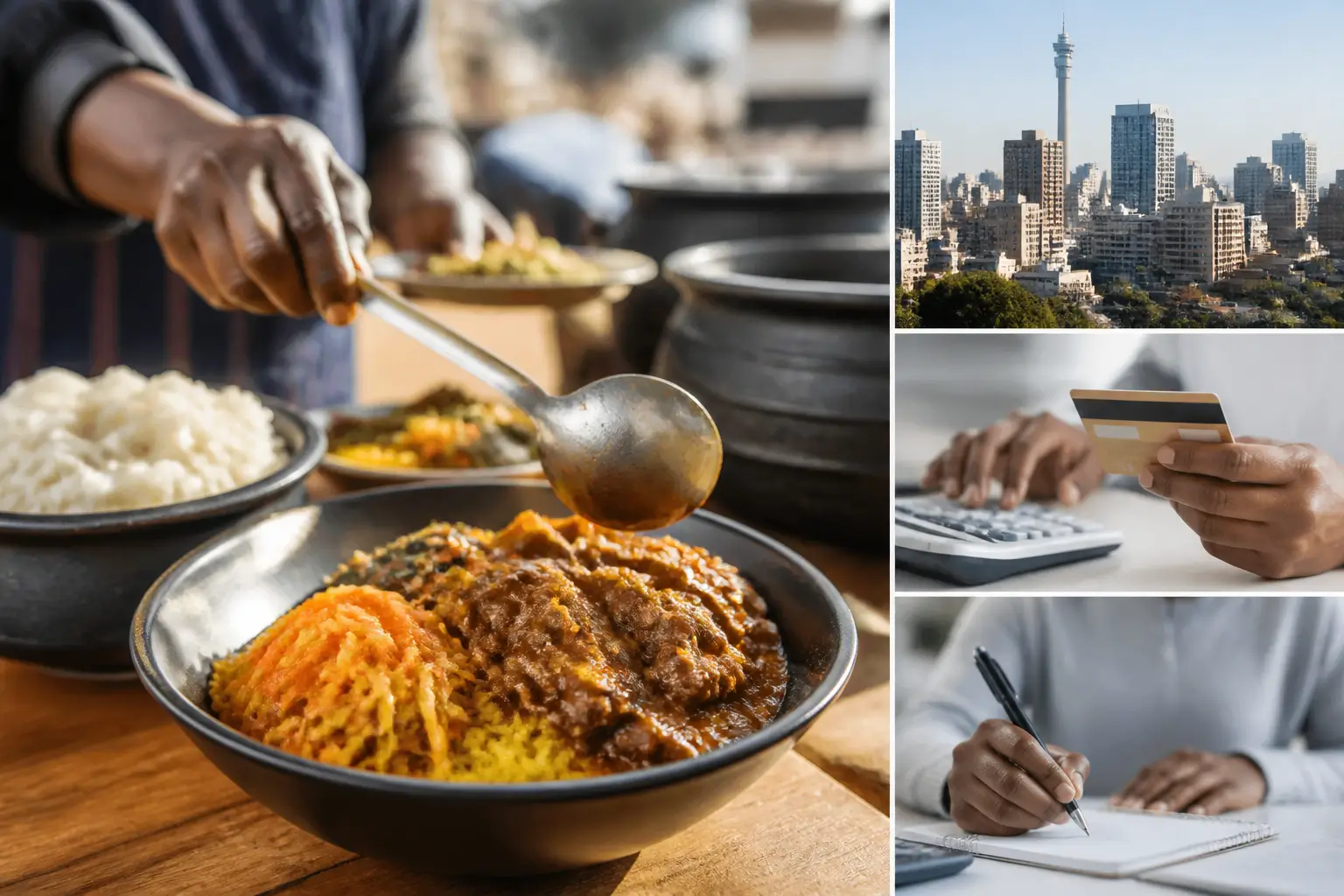
Affordable food Johannesburg is getting global attention
Affordable food Johannesburg has become part of a bigger conversation about how people in South Africa eat, spend and cope with rising everyday costs. Johannesburg being named among the top 10 cities in the world for street food is not only a feel-good story. It also says something useful about budget-friendly living, small business grit and the value of simple meals that do not break the bank.
For many households, food is one of the biggest monthly expenses. So when a city like Johannesburg gets recognised for street food, we see more than flavour. We see a practical reminder that good meals do not always need a restaurant bill attached to them.
Our team sees this as a simple money lesson: when you find meals that fit your budget, you create a little more room in your month for transport, school costs and repayment discipline.
Why this ranking matters in South Africa
Johannesburg sits in a very different category from the world’s famous food capitals, but it holds its own because it offers variety, energy and strong local character. The ranking highlights how city food culture can thrive even when households are under pressure.
That matters in South Africa, where many people are thinking harder about credit, weekly spending and how to manage repayment without falling behind. A cheap lunch is not a miracle solution, of course. But affordable eating can ease pressure on a tight budget, especially for workers, students and families trying to stretch their rand.
Street food and the everyday budget
Street food often works because it is direct. You pay for a meal, you eat, and you move on. No extra frills. No big table service. That makes it easier for people who want something filling without spending too much.
In practical terms, that kind of spending can help people keep better control of their weekly cash flow. If you know where affordable meals are, you may be less likely to lean on credit for small daily expenses.
So what does affordable food Johannesburg look like on the ground?
The city’s street food scene includes familiar township favourites and quick meals that have long been part of local life. Think of a kota, grilled offal, fish with pap, or a food truck meal that brings home-style cooking into a busy urban setting.
What stands out is not just the price. It is the mix of taste, convenience and local identity. That is why people keep coming back to these meals. They feel rooted in place, and they often satisfy without requiring a large spend.
- Meal type: Kota or loaded sandwich — Why people choose it: Quick, filling and easy to share — Budget angle: Can be a lower-cost lunch option
- Meal type: Grilled traditional food — Why people choose it: Strong flavour and familiar taste — Budget angle: Often better value than sit-down dining
- Meal type: Food truck meal — Why people choose it: Convenient and varied — Budget angle: Helps keep weekday spending predictable
- Meal type: Local plate with pap and sides — Why people choose it: Comfort food for daily eating — Budget angle: Good for people watching every rand
Of course, affordability depends on the person and the portion. But the broader point remains: Joburg food culture gives people more choices when they are trying to manage money carefully.
What this tells us about money habits
We often talk about loans, credit and instalments, but everyday choices matter just as much. A person who spends less on lunch every week may have a bit more room to handle transport, groceries or an unexpected bill. That does not solve a cash shortfall on its own, but it can make a difference.
In our experience, people often overlook small repeat costs. A few rand here and there on meals, snacks and drinks can add up faster than expected. That is why budget-friendly eating is part of financial wellness, even if it seems ordinary.
Small savings can support repayment discipline
Repayment discipline is easier when your basic spending is under control. If your food costs are more predictable, you may find it easier to plan for debit orders and monthly commitments.
That matters for anyone using personal loans or managing other forms of credit. Borrowing should always fit into your real budget, not an optimistic one. When daily spending is calmer, it is easier to see what is left after essentials.
We are not saying affordable meals replace a proper budget. They do not. But they can support one.
Entrepreneurs are part of the story too
Johannesburg’s street food success is also a business story. Many small traders and food operators serve people who want something fast, tasty and affordable. That takes work, consistency and a good understanding of what customers need.
Some of these businesses are built around family recipes. Others are shaped by necessity, with owners turning skills and resilience into income. In a city with many financial pressures, that entrepreneurial energy matters.
It also shows how local food businesses can grow by solving a simple problem: how to feed people well at a price they can manage.
Why local food businesses matter
- They create income opportunities close to where people live and work.
- They keep money circulating in local communities.
- They offer lower-cost eating options for residents.
- They reflect the culture and history of the area.
That is why this ranking feels bigger than food alone. It is about resilience, trade and everyday living in South Africa.
Should you use credit for everyday meals?
In general, we would be cautious about that. Food is a regular expense, which means it is usually better managed through budgeting than borrowing. If someone is leaning on credit to cover routine meals every month, that can be a sign that the budget needs a closer look.
A personal loan may be useful for a planned, larger expense, but borrowing to cover day-to-day eating can become expensive and stressful. It is always worth asking whether the expense is temporary, whether it is essential, and whether the repayment will fit comfortably into your month.
The more predictable your food spending is, the less likely you are to get caught in a cycle where small shortages turn into bigger debt problems.
Frequently asked questions
Why is Johannesburg being discussed as a food city?
Because it was named among the top 10 cities in the world for street food, which highlights its strong local food culture and budget-friendly meal options.
How does affordable food help with money management?
It can reduce everyday pressure on your budget, which may make it easier to plan for transport, groceries and monthly repayments.
Is street food always the cheapest option?
Not always, but it is often more affordable than sit-down dining and can offer good value for a filling meal.
Should I borrow money for regular food costs?
Usually, no. Food is normally best handled through a budget. If you are regularly short, it may help to review your spending and income first.
If you want to learn more about responsible borrowing and general loan options, visit Spring Loans.
This article is for general informational purposes only and is not financial advice. Spring Loans is a registered South African credit provider — please speak to a qualified financial adviser or registered credit provider before making borrowing decisions.
Ready to apply?
Spring Loans is a registered South African credit provider. Visit www.springloans.co.za to check your eligibility and apply online.