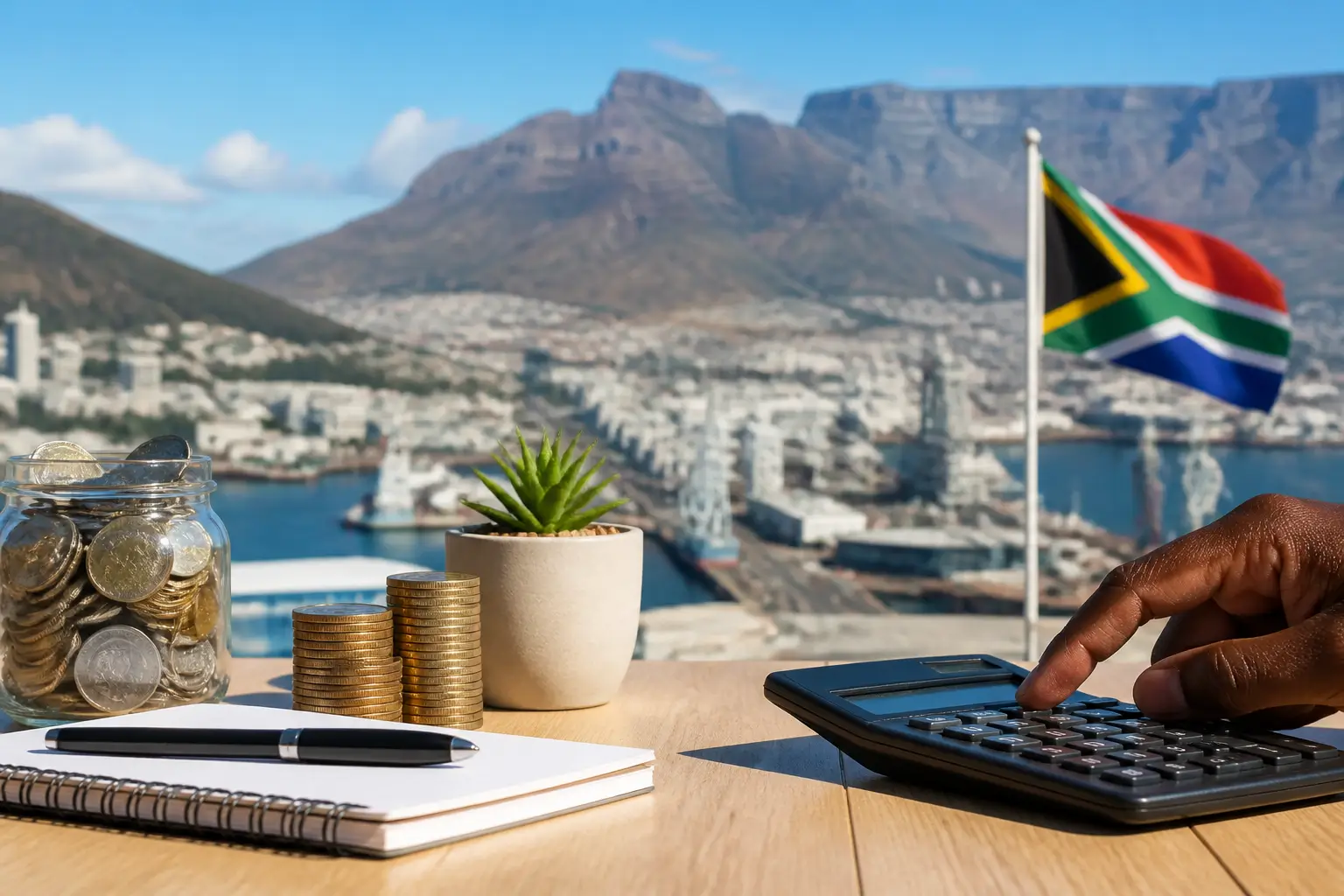

Why investing in your 20s South Africa matters more than you think
When we talk to young South Africans about building wealth, one question comes up repeatedly: "I don't earn much yet – how can I possibly save for retirement?" It's a fair concern. But here's what many people don't realise: when it comes to investing in your 20s South Africa, the amount you contribute matters far less than how early you start.
The single most powerful factor in wealth creation isn't your salary, your investment knowledge, or even which assets you choose. It's time. And if you're in your twenties, time is the one resource you have in abundance.
Compound interest: the force that turns rands into millions
Compound interest is often called the eighth wonder of the world, and for good reason. It's not just interest on your original investment – it's interest on the interest you've already earned. Each year, your money doesn't just grow; it grows faster.
Think of it like a snowball rolling down a hill. At first, it picks up a thin layer of snow. But as it rolls further, that new layer also starts collecting snow. The snowball doesn't grow steadily – it accelerates. Your investment works exactly the same way.
This snowball effect is why investing in your 20s South Africa creates such a dramatic difference compared to starting even a decade later.
The real cost of waiting
Let's make this concrete with rand figures that reflect what South Africans actually earn and invest.
Imagine two friends, both 25 years old, both living in Johannesburg. Thandi starts putting away R500 every month into a retirement fund. Her friend Sipho decides to wait – he'll start when he's 35, once he's earning more.
Fast-forward to retirement at age 65. Both have been investing R500 monthly (neither increased their contributions over time), and both averaged a 10% annual return – a reasonable long-term expectation for balanced equity investments.
Here's where it gets interesting:
- Investor: Thandi (started at 25) — Monthly contribution: R500 — Years invested: 40 years — Value at retirement: R2,921,111
- Investor: Sipho (started at 35) — Monthly contribution: R500 — Years invested: 30 years — Value at retirement: R1,085,661
- Investor: Difference — Monthly contribution: – — Years invested: 10 years — Value at retirement: R1,835,450
That R1.8 million gap? That's the price Sipho paid for waiting ten years. And here's the kicker: Thandi only contributed R6,000 more in total (R500 × 12 months × 10 years = R60,000), yet she ended up with nearly R1.9 million more.
Those first ten years of Thandi's investment delivered more than half of her final retirement capital. That's the power of time working in your favour.
You don't need a fortune to start
One of the biggest myths we hear is that you need thousands of rands to begin investing. That's simply not true in South Africa today. Many investment platforms and retirement funds accept contributions as low as R250 or R500 per month.
The mistake many young South Africans make is thinking, "I'll start investing when I can afford R2,000 a month." By the time that happens, you might be 30 or 35 – and you've already lost your most valuable years.
Small amounts, big discipline
Starting with R300 or R500 monthly might feel insignificant. But it builds something more valuable than wealth in the short term: it builds the habit of investing. You learn to live on slightly less. You get comfortable with seeing money leave your account on debit order. You start checking your investment balance and understanding how markets move.
By the time your income increases, investing is already wired into your monthly budget. Increasing from R500 to R1,500 feels natural, not like a sacrifice.
What can you actually invest in during your 20s?
South African investors in their twenties have several options, each with different levels of risk, access, and potential return:
Retirement annuities
A retirement annuity (RA) is one of the most tax-efficient ways to invest for the long term. Contributions are tax-deductible up to certain limits, which means SARS effectively subsidises part of your saving. Your money is locked away until retirement, which might sound restrictive – but for long-term wealth building, that forced discipline is often a benefit, not a drawback.
Tax-free savings accounts
These accounts let you invest up to R36,000 per year (with a lifetime limit of R500,000) completely tax-free. No tax on interest, dividends, or capital gains. For young investors, maxing out your annual tax-free allowance – even if it's just R3,000 a month – can create a powerful supplementary pot alongside your retirement fund.
Unit trusts and exchange-traded funds
These pooled investment vehicles let you access diversified portfolios – often including local and international shares, bonds, and property – without needing to pick individual stocks. They're flexible, relatively low-cost, and you can start with modest monthly contributions.
When you're young, you can afford to take on more equity exposure (shares) because you have decades to ride out market ups and downs. Historically, equities have delivered the strongest long-term returns, even though they're more volatile in the short term.
How to fit investing into a tight budget
We know that many South Africans in their twenties are juggling student debt, rent, transport costs, and maybe sending money home to family. So how do you carve out R500 for investing?
- Automate it first. Set up your debit order to run on the same day you get paid, before you have a chance to spend that money elsewhere.
- Cut one discretionary expense. Two takeaway coffees a week, one less night out per month, or downgrading a streaming subscription can free up R300 to R600 easily.
- Treat windfalls wisely. Got a bonus, tax refund, or birthday money? Put half into your investment account and enjoy the other half guilt-free.
- Start smaller if you must. R250 a month is infinitely better than R0. You can always increase it later.
The goal isn't to live like a monk. It's to make a conscious trade: a little less spending now in exchange for financial freedom later.
The link between credit, debt, and investing
Here's a hard truth: if you're carrying expensive debt – especially personal loans or credit cards with interest rates above 20% – paying that off should usually come before aggressive investing. Why? Because you're unlikely to earn a 20% return on your investments consistently, so you're better off eliminating that high-cost debt first.
That said, don't fall into the trap of thinking you must be completely debt-free before you start. If you have manageable debt with reasonable repayment terms, you can do both: maintain your debt repayments and start a small monthly investment.
In our experience, young South Africans who treat investing and debt repayment as parallel priorities – rather than sequential ones – tend to build healthier long-term money habits.
Mistakes to avoid when investing in your 20s
We've seen plenty of enthusiasm from young investors, but enthusiasm without strategy can backfire. Here are the pitfalls to watch out for:
Chasing get-rich-quick schemes
If someone promises you guaranteed returns of 30% a year, or tries to sell you on a "can't-miss" cryptocurrency or pyramid scheme, walk away. Real wealth is built slowly and steadily, not through shortcuts.
Stopping and starting
Life happens. Your car breaks down, you lose your job, you need to help family. But if you stop your monthly investment every time something comes up, you lose the compounding momentum. Try to keep some amount going in, even if you need to reduce it temporarily.
Ignoring fees
A 2% annual management fee might sound small, but over 40 years it can eat hundreds of thousands of rands from your retirement pot. Look for low-cost index funds or platforms with transparent, competitive fees.
Being too conservative
When you're 25, you don't need your money to be safe and accessible in two years – you need it to grow over four decades. Parking everything in a low-interest savings account means inflation will erode your purchasing power. You can afford to take on more risk in your twenties because you have time to recover from market downturns.
Repayment discipline builds investing discipline
If you've ever taken out a personal loan – perhaps to cover emergency expenses or consolidate debt – you'll know the relief that comes from making that final payment. That same discipline that got you through monthly loan repayments can be redirected into monthly investments.
Think of your future self as a creditor. You owe that person a comfortable retirement, financial security, and options. The monthly contribution you make to your investment account is a repayment on that debt.
At Spring Loans, we see how South Africans manage credit responsibly every day. That same responsibility – showing up month after month, honouring your commitment even when it's not exciting – is exactly what successful long-term investing requires.
What if you're already in your 30s?
If you're reading this and thinking, "I'm 32 – have I missed the boat?" the answer is no. You've lost some time, yes. But the second-best time to start is right now.
A 32-year-old who invests R500 a month until 65 will still accumulate over R1.5 million (assuming 10% average annual return). That's not as much as starting at 25, but it's a lot more than starting at 40 – or never starting at all.
The principle remains the same: the earlier you begin, the more time does the heavy lifting for you.
Frequently asked questions
How much should I be investing in my 20s in South Africa?
Financial advisers often recommend saving 10% to 15% of your gross income for retirement. If you're earning R15,000 a month, that's R1,500 to R2,250. But if that feels unrealistic right now, start with whatever you can afford – even R300 or R500 monthly. The habit matters more than the amount at this stage.
Is it better to pay off debt or start investing?
It depends on the interest rate. High-cost debt (credit cards, some personal loans) above 18% to 20% should usually be cleared first. For lower-cost debt like student loans or vehicle finance, you can often do both: maintain your repayment plan while starting a modest investment. Consider speaking to a qualified financial adviser to assess your specific situation.
Can I access my retirement savings if I need the money urgently?
Retirement annuities are locked until you turn 55, with very limited exceptions. Tax-free savings accounts and unit trusts are more accessible, though withdrawing early means you lose the compounding benefit. Emergency funds (kept in a separate, accessible savings account) are meant to cover urgent expenses so you don't need to raid long-term investments.
What returns can I realistically expect from investing?
Historically, South African equity markets have delivered average annual returns of around 10% to 12% over long periods (20+ years), though individual years vary wildly. Balanced funds (mixing shares, bonds, and cash) typically target 8% to 10%. Remember, these are averages – some years you'll see 20% growth, others you might see losses. The key is staying invested through the cycles.
This article is for general informational purposes only and is not financial advice. Spring Loans is a registered South African credit provider — please speak to a qualified financial adviser or registered credit provider before making borrowing decisions.
Ready to apply?
Spring Loans is a registered South African credit provider. Visit www.springloans.co.za to check your eligibility and apply online.