

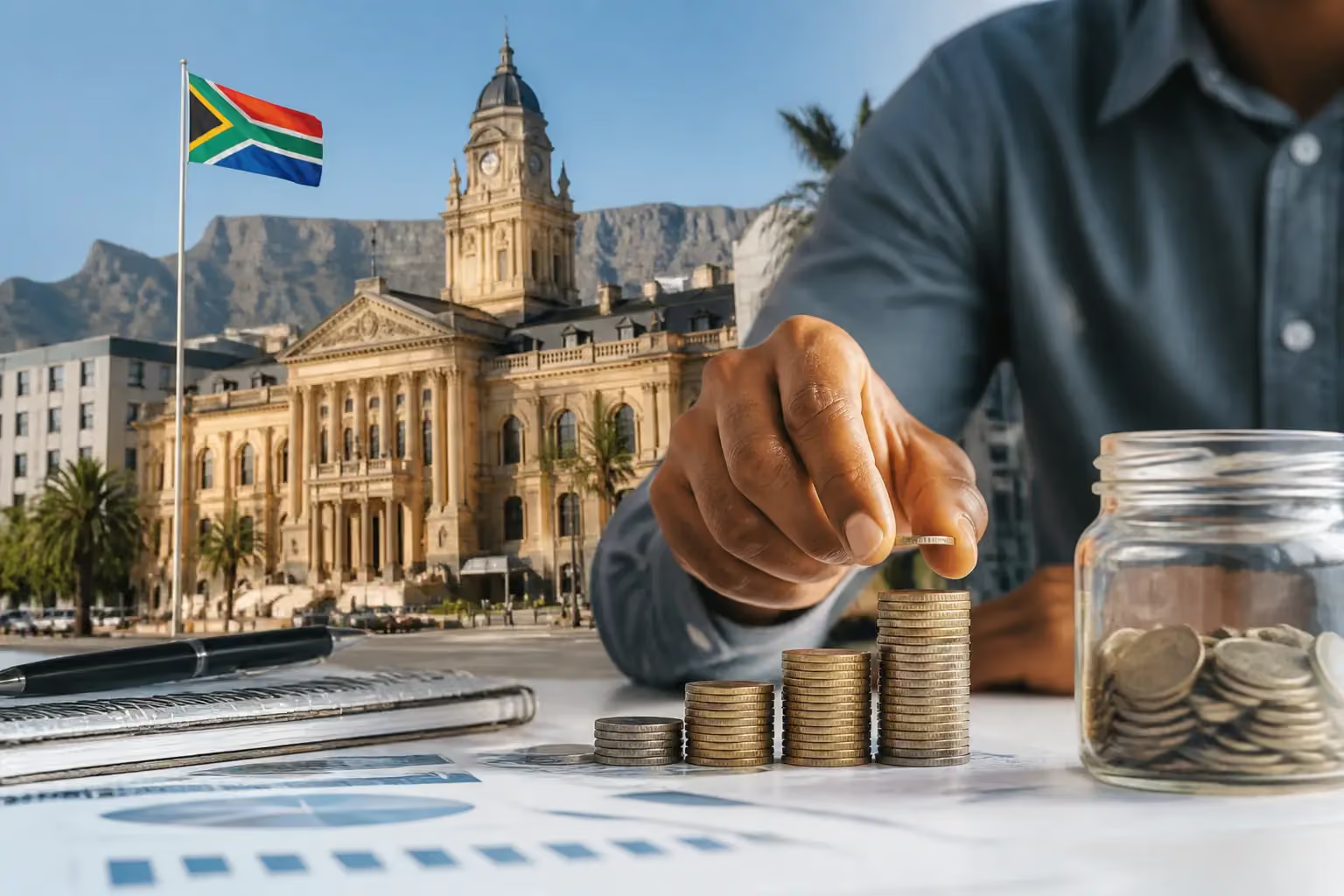
Municipal finance South Africa: the crisis hitting every household
Drive through any South African town or city today and the signs are impossible to miss. Potholes swallow entire wheels. Streetlights stay dark for months. Water trickles to a stop mid-shower, and refuse piles up on street corners. These aren't isolated incidents—they're symptoms of a municipal finance South Africa crisis that touches every resident, every day.
When your municipality can't balance its books, you pay the price. Service delivery collapses, property values tank, and local businesses struggle. For those of us managing tight household budgets, broken infrastructure means higher car repair bills, water tank purchases, and private security costs—expenses that add up fast when municipal services fail.
But what if there were a way to intervene before a city completely collapses? Recent proposals suggest borrowing a tool from the banking sector: curatorship.
How banks survive—and why municipalities don't
Here's something most South Africans don't realise: when a bank gets into serious financial trouble, the law allows for curators—independent financial experts—to step in and take control. The curator's job is clear: stabilise the institution, protect depositors, and restore financial health. No political interference. No long committee meetings. Just hard decisions, implemented fast.
We've seen this work. When banks have faced collapse in the past, curatorship prevented chaos. Depositors were protected, creditors got paid, and the financial system stayed stable.
Now contrast that with what happens when a municipality goes under.
There's hand-wringing. National Treasury issues warnings. The province sends in intervention teams. Politicians make speeches. Audit reports pile up. And meanwhile, the bins don't get collected, the water doesn't flow, and residents watch their rates and electricity bills climb while services evaporate.
The cost of delay
Every month of municipal dysfunction costs you money. When the council can't manage its finances:
- Tariffs rise to cover mismanagement and corruption
- Service delivery deteriorates, forcing you to pay for private alternatives
- Property values decline, eroding your single biggest asset
- Small businesses close, shrinking the local job market
- Credit costs increase as lenders see municipal debt as riskier
If you've ever applied for a personal loan or vehicle finance, you know lenders look at affordability. They want to know: can you manage your existing commitments? Municipal finance South Africa operates under the same principle—except when municipalities fail that test, there's no automatic mechanism to force change.
So why can't we just appoint curators for failing municipalities?
The short answer: the law doesn't clearly allow it. Not yet.
Our Constitution gives municipalities extensive autonomy. Section 139 of the Constitution does allow provincial governments to intervene when a municipality can't fulfil its obligations—but the intervention process is political, bureaucratic, and slow. There's no equivalent to the swift, technocratic takeover that happens when a bank is placed under curatorship.
The Municipal Finance Management Act (MFMA) sets out rules for how municipalities must handle money, but it doesn't create a clear pathway for an independent expert to step in, override councillors, and make the tough calls needed to restore financial discipline.
What curatorship could look like for cities
Imagine this: a metropolitan council runs up billions in debt, fails to pay Eskom, and can't deliver basic services. Under a curatorship model, here's what could happen:
- National Treasury or the Reserve Bank appoints a qualified, independent curator
- The curator takes over financial decision-making—no council vote required
- Non-essential spending stops immediately; critical services get prioritised
- Debt restructuring begins with creditors, including state-owned enterprises
- Revenue collection improves through professional enforcement
- Once finances stabilise, democratic control gradually returns
It's not a perfect solution. Suspending elected government, even temporarily, is a big step. But when the alternative is total collapse—leaving residents without water, electricity, or sanitation—a structured intervention starts to look essential.
If we trust curators to rescue banks and protect depositors' life savings, why not trust them to rescue cities and protect residents' quality of life?
Why this matters to your wallet
You might be thinking: I don't work for the municipality, so why should I care about their balance sheet?
Because municipal financial mismanagement directly impacts your cost of living and your financial wellbeing. Here's how:
Rising household costs
When municipalities mismanage funds, they try to plug the gap by hiking rates, electricity tariffs, and water charges. You're paying more not for better services, but to cover procurement fraud, ghost employees, and unpaid Eskom bills. That leaves less money in your budget for everything else—from groceries to school fees to loan repayments.
Asset erosion
For most South Africans, property is the single biggest asset we own. A dysfunctional municipality tanks property values. Try selling a house in a town with no water, constant power cuts, and streets full of potholes. Buyers won't pay market value—if they're willing to buy at all. Suddenly the home loan you're diligently paying off is securing an asset worth far less than you borrowed.
Limited borrowing power
When you apply for credit—whether it's a personal loan, vehicle finance, or a home loan—lenders assess your financial position in context. If you live in an area with collapsing municipal services, your expenses are likely higher (private security, water tanks, generator fuel). Your income might be at risk if local businesses shut down. All of this affects your creditworthiness and the terms you're offered.
At Spring Loans, we see first-hand how municipal dysfunction ripples through household finances. Clients tell us they need credit to cover emergency expenses—fixing cars damaged by potholes, buying water when taps run dry, replacing appliances ruined by power surges. These aren't luxuries. They're survival costs created by municipal failure.
What needs to change in municipal finance South Africa?
Getting curatorship right would require legal reform. We'd need amendments to the MFMA and possibly the Constitution itself. But the framework already exists in banking law—it's been tested, refined, and proven to work.
Here's what a municipal curatorship law might include:
- Element: Trigger criteria — How it works: Clear financial thresholds (e.g. debt-to-revenue ratio, service delivery collapse) that automatically initiate curatorship
- Element: Curator appointment — How it works: Independent panel selects qualified financial experts with no political ties
- Element: Powers and duties — How it works: Authority to restructure debt, cut wasteful spending, enforce revenue collection, and renegotiate contracts
- Element: Accountability — How it works: Regular public reporting on financial recovery progress
- Element: Exit plan — How it works: Defined milestones for returning control to elected officials once finances stabilise
Would this solve everything overnight? No. Municipal collapse is driven by corruption, incompetence, political infighting, and years of neglect. A curator can't magic away those problems. But they can stop the bleeding, stabilise finances, and create the conditions for recovery.
The political will problem
Let's be honest: municipal curatorship faces fierce political resistance. No politician wants to admit their city needs a financial takeover. Councillors don't want to lose control. Provincial governments worry about the optics. National Treasury has limited appetite for direct confrontation with politically connected mayors.
But the cost of inaction keeps rising. Residents are voting with their feet—those who can afford to are leaving dysfunctional municipalities for better-run areas. Businesses are closing or relocating. And the poorest residents, who can't leave, suffer most as services disappear entirely.
At some point, the political cost of not intervening will outweigh the discomfort of curatorship. We're probably closer to that tipping point than many politicians realise.
What you can do while we wait for reform
Legal reform takes time—often years. In the meantime, here's how to protect your finances from municipal dysfunction:
Budget for the real cost of living
Don't assume municipal services will stay reliable. Build a buffer into your household budget for water tanks, generator fuel, security upgrades, and vehicle repairs. Yes, these should be covered by your rates—but budgeting for reality beats budgeting for what should be.
Manage debt carefully
If your municipality is struggling, you face higher living costs and potentially lower property values. Before taking on new credit, ask yourself: can I still afford the repayments if my municipal costs spike or my property value drops? Consider whether you can comfortably manage repayments even if circumstances change.
Diversify your assets
Over-concentration in property in a single dysfunctional municipality is risky. If you have savings or investment capacity, consider spreading your assets across different regions or asset classes. Don't let municipal mismanagement wipe out your entire net worth.
Stay informed and engaged
Attend council meetings. Join ratepayer associations. Vote in local elections. The more residents hold municipalities accountable, the harder it becomes for officials to hide financial mismanagement. Transparency and public pressure won't fix everything, but they help.
Could curatorship really work here?
Sceptics will say South African municipalities are too far gone, too politicised, too corrupt for a banking-style intervention to succeed. They'll argue that curators would face sabotage, legal challenges, and impossible resistance.
Maybe. But consider the alternative.
Right now, dozens of municipalities are on a slow-motion path to total collapse. Residents suffer. Businesses close. Infrastructure crumbles. Debt mounts. And every intervention we've tried—audits, investigations, provincial takeovers, special advisors—has failed to turn things around.
The banking sector proved that swift, technocratic intervention can stabilise failing institutions and protect stakeholders. Municipal finance South Africa desperately needs the same discipline, the same urgency, and the same willingness to override politics when finances are on the brink.
We don't need to reinvent the wheel. The blueprint exists. We just need the political courage to use it.
Frequently asked questions
What is municipal curatorship?
Municipal curatorship would involve appointing an independent financial expert to take control of a failing municipality's finances, similar to how curators manage banks in distress. The curator would have authority to make financial decisions, restructure debt, and restore stability without needing council approval.
Does South African law currently allow municipal curators?
Not explicitly. The Constitution allows provincial intervention under Section 139 when municipalities fail to fulfil obligations, but this process is political and bureaucratic. There's no clear legal framework for swift, technocratic curatorship like exists for banks. Legal reform would be needed.
How does municipal financial collapse affect ordinary residents?
When municipalities can't manage money, residents face higher tariffs to cover mismanagement, deteriorating services that force expensive private alternatives (water tanks, security, generators), declining property values, and reduced local employment as businesses close or relocate.
Why can't provinces just fix failing municipalities?
Provincial interventions under current law are slow, politically constrained, and often ineffective. Provinces lack the authority to override elected councils quickly or impose the kind of financial discipline a curator could. Political considerations frequently dilute tough decisions.
What would prevent curators from being corrupt themselves?
A well-designed curatorship framework would include independent appointment processes (not political appointments), transparent reporting requirements, defined performance milestones, and oversight from National Treasury or the Reserve Bank. The key is removing political influence from both appointment and operation.
This article is for general informational purposes only and is not financial advice. Spring Loans is a registered South African credit provider — please speak to a qualified financial adviser or registered credit provider before making borrowing decisions.
Ready to apply?
Spring Loans is a registered South African credit provider. Visit www.springloans.co.za to check your eligibility and apply online.

.svg)