

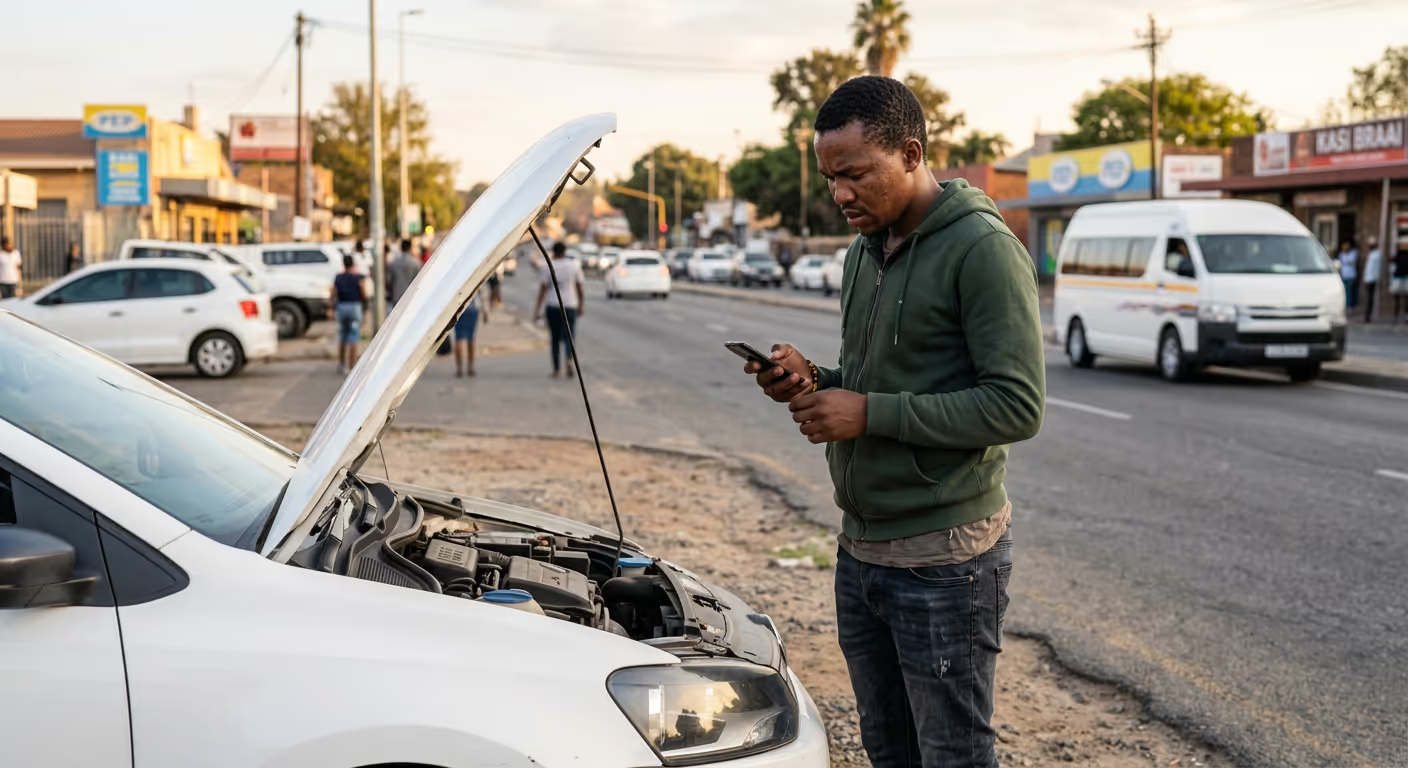
It's 7am on a Monday. You turn the key. Nothing.
Or it's the middle of the month and a hospital bill arrives that you weren't expecting. Or you wake up to water pouring through the ceiling from a burst geyser pipe.
Emergencies don't announce themselves. They don't check whether it's a convenient time, whether your savings are topped up, or whether you've had a good month. They simply arrive — and they almost always cost money you don't currently have sitting ready.
For millions of South Africans, that gap between an emergency and the next payday is one of the most financially stressful moments in life. This article is for those moments. Here's what a personal loan can do, how fast it actually works, what it genuinely costs, and how to make sure you're borrowing from a safe, registered lender when you need help fast.
The Most Common Financial Emergencies South Africans Face
Understanding the most frequent emergency situations helps frame when a personal loan makes sense — and when it might not be the right tool.
🚗 Car Breakdowns and Repairs
For the majority of working South Africans, a car isn't a luxury — it's how you get to work, take your children to school, and run your household. When it breaks down, the clock starts ticking immediately. A starter motor, a clutch, or a broken alternator can cost R3,000–R8,000 or more and needs to be fixed before Monday morning.
This is one of the clearest use cases for an emergency personal loan: a specific, calculable cost, a genuine urgency, and a repayment that can be spread over a manageable period.
🏥 Medical and Dental Emergencies
Even South Africans with medical aid regularly face unexpected out-of-pocket medical costs — co-payments, specialist shortfalls, dental emergencies not covered by their plan, or urgent procedures that exceed their annual benefit limits.
For those without medical aid, an emergency hospitalisation, an urgent prescription, or a dental abscess that can't wait can generate a bill that is impossible to absorb in a single month.
🏠 Home Emergencies
A burst geyser. A flooded bathroom. A roof leak after summer storms. A broken security gate or door lock. These aren't lifestyle upgrades — they are safety and habitability emergencies that cannot be deferred. Many South African homeowners and renters face these situations with no emergency fund in place, particularly mid-month.
⚡ Utility Disconnections and Municipal Arrears
With the cost of electricity, water, and municipal rates rising steeply across South Africa, some households fall into arrears and face disconnection threats. Restoring a service disconnection often requires paying arrears in a lump sum — a sum that can be impossible to find overnight without external assistance.
👨👩👧 Family Emergencies
An urgent flight to be with a sick family member. A funeral that requires immediate travel. A family member's school or accommodation situation that needs immediate resolution. These events are unpredictable by definition and often carry costs that cannot be negotiated or delayed.
What Is an Emergency Personal Loan — and How Is It Different From a Payday Loan?
These two terms are often used interchangeably in South African financial advertising, but they are meaningfully different products — and understanding the difference can save you significant money.
Payday Loan
A payday loan is a very short-term, small loan designed to be repaid on your next salary date — typically within 15–30 days. Loan amounts are usually limited to R500–R8,000. Because of the very short repayment period, the monthly cost can be high even when the annual rate is capped.
Payday loans are appropriate for very small, short-term cash flow gaps that you are certain you can repay in full on your next payday without disrupting your regular budget.
Personal Loan for Emergencies
A personal loan for emergencies offers a larger loan amount — typically R1,000–R50,000+ — with a repayment period ranging from 3 to 60 months. This spreads the cost of the emergency over a period that is manageable within your monthly budget, rather than requiring full repayment in 30 days.
For most genuine emergencies — a R6,000 car repair, a R15,000 medical bill, a R10,000 geyser replacement — a personal loan with a 6–12 month repayment term is far more financially manageable than a payday loan demanding full repayment next month.
The right product depends on the size of your emergency and your realistic ability to repay. A small cash shortfall this week: a short-term loan may work. A significant emergency that exceeds what you can repay in 30 days: a personal loan with a longer term is usually the safer choice.
How Fast Can You Actually Get Emergency Funds in South Africa?
Speed matters in an emergency. Here's what the realistic timeline looks like with a registered South African online lender like Spring Loans:
Realistic expectation: For most applicants who apply during business hours with documents ready, funds can reach your account on the same day or the following business day.
What slows things down:
- Incomplete or unclear documents
- Applications submitted after the processing cut-off time
- Bank-to-bank transfer delays (some banks process incoming payments overnight)
- Applications requiring additional verification
Having your documents ready before you apply — your South African ID, latest 3 months' bank statements, and most recent payslip — is the single most effective way to speed up the process.
What Does an Emergency Loan Actually Cost?
This is the question most emergency borrowers don't stop to ask — and it's the most important one. The cost of an emergency loan in South Africa is regulated by the National Credit Act and consists of:
Interest rate: Capped by the NCA at repo rate + 21% per annum for unsecured personal loans. This means no registered lender can charge above this rate regardless of your credit profile.
Initiation fee: A once-off fee charged when your loan is granted, regulated and capped by the NCA based on loan size.
Monthly service fee: Capped at R69 per month.
Credit life insurance: An optional but commonly included insurance product that covers your outstanding balance in the event of death, disability, or retrenchment.
Here's a simplified illustration of what an emergency loan might cost at regulated rates:
Figures are illustrative estimates based on NCA-regulated maximum rates. Your actual repayment will depend on your credit profile, the lender's rate, and the specific loan terms offered. Always review your Pre-Agreement Quotation for exact figures.
The key number to focus on is the total repayable amount — not just the monthly instalment. This tells you the true cost of the emergency loan over its full term.
How to Borrow Safely in an Emergency: The 5-Point Check
Emergencies create urgency — and urgency creates vulnerability. Fraudulent lenders, lead-generation traps, and loan sharks are most effective when people are stressed and not thinking carefully. Before you submit your details to any lender, run through this quick check:
✅ 1. Are they NCR-registered?Every legitimate credit provider in South Africa must be registered with the National Credit Regulator. Check the NCR number on the lender's website and verify it at ncr.org.za. Spring Loans' NCR registration number is displayed in our website footer and on every loan agreement.
✅ 2. Is there a written Pre-Agreement Quotation?A legitimate lender must provide a full written quotation showing interest rate, fees, monthly repayment, and total cost before you sign anything. No legitimate lender disburses funds without this step.
✅ 3. Are you being asked to pay anything upfront?No registered lender in South Africa charges a fee before disbursing your loan. If anyone asks you to pay an "insurance deposit," "release fee," or any other upfront amount — stop immediately. This is a scam.
✅ 4. Is there a secure online application?Look for "https://" and a padlock icon in your browser address bar. Never submit personal or banking details through an unsecured website or via WhatsApp.
✅ 5. Are the terms clear and complete?If the loan terms — interest rate, repayment amount, total cost — are vague, verbal only, or "to be confirmed later," do not proceed.
What to Do Before You Apply: 3 Quick Steps
Even in an emergency, taking 10 minutes to do these three things will result in a better outcome:
Step 1: Define the exact amount you need.Borrow the specific amount required to resolve the emergency — not a round number that feels comfortable, and not extra "just in case." Borrowing more than you need costs you more and takes longer to repay.
Step 2: Calculate what you can repay monthly.Look at your take-home salary and subtract your existing fixed monthly obligations — rent, bond, other loan repayments, debit orders. The amount left over is the maximum you can allocate to a new loan repayment. A responsible lender will assess this formally — but knowing your own number before you apply helps you choose the right term.
Step 3: Get your documents ready.South African ID (green barcoded or smart card), latest 3 months' bank statements, and most recent payslip. Having these ready before you start the application removes the most common cause of processing delays.
How to Apply for an Emergency Loan with Spring Loans
Spring Loans offers fast, transparent personal loans to South Africans through a fully secure online application process. There is no branch visit required, no paper forms, and no waiting in queues.
Here's how it works:
- Visit springloans.co.za and use the loan calculator to select your amount and repayment term
- Complete the online application form with your personal and employment details
- Upload your ID, bank statements, and payslip securely
- Receive your credit decision — we aim to respond as quickly as possible
- Review your Pre-Agreement Statement and Quotation — take time to read it fully
- Sign electronically if you're happy with the terms
- Receive funds directly into your bank account
Learn exactly how the process works on our how to borrow page, get answers to common questions on our FAQ page, or contact us directly if you'd prefer to speak to someone first.
After the Emergency: Building Your Buffer
Once the immediate crisis is resolved and your loan repayments are underway, one of the most valuable things you can do is start building a small emergency fund — even a modest one — so that the next unexpected expense doesn't require borrowing.
The target is 3 months of essential living expenses. That's the gold standard. But even R2,000–R5,000 sitting in a separate savings account covers the majority of common South African household emergencies: a car battery, a minor appliance repair, an unexpected school cost.
Automate a small transfer on payday — even R200 or R300 — into a savings account you don't touch. It takes 2 minutes to set up and compounds into genuine financial resilience over time.
The Bottom Line
Emergencies are part of life — and in South Africa, where the cost of living is rising and the safety net is thin for many households, a sudden unexpected expense can destabilise an otherwise carefully managed budget.
A personal loan from a transparent, NCR-registered lender is a legitimate, legal, and often sensible way to manage a genuine emergency — provided you borrow what you need, understand the full cost, and choose repayment terms that fit your budget.
The key is to borrow smart, not just fast. And with Spring Loans, you don't have to choose between the two.
Apply online today — fast, transparent, fully NCR-registered.

.svg)