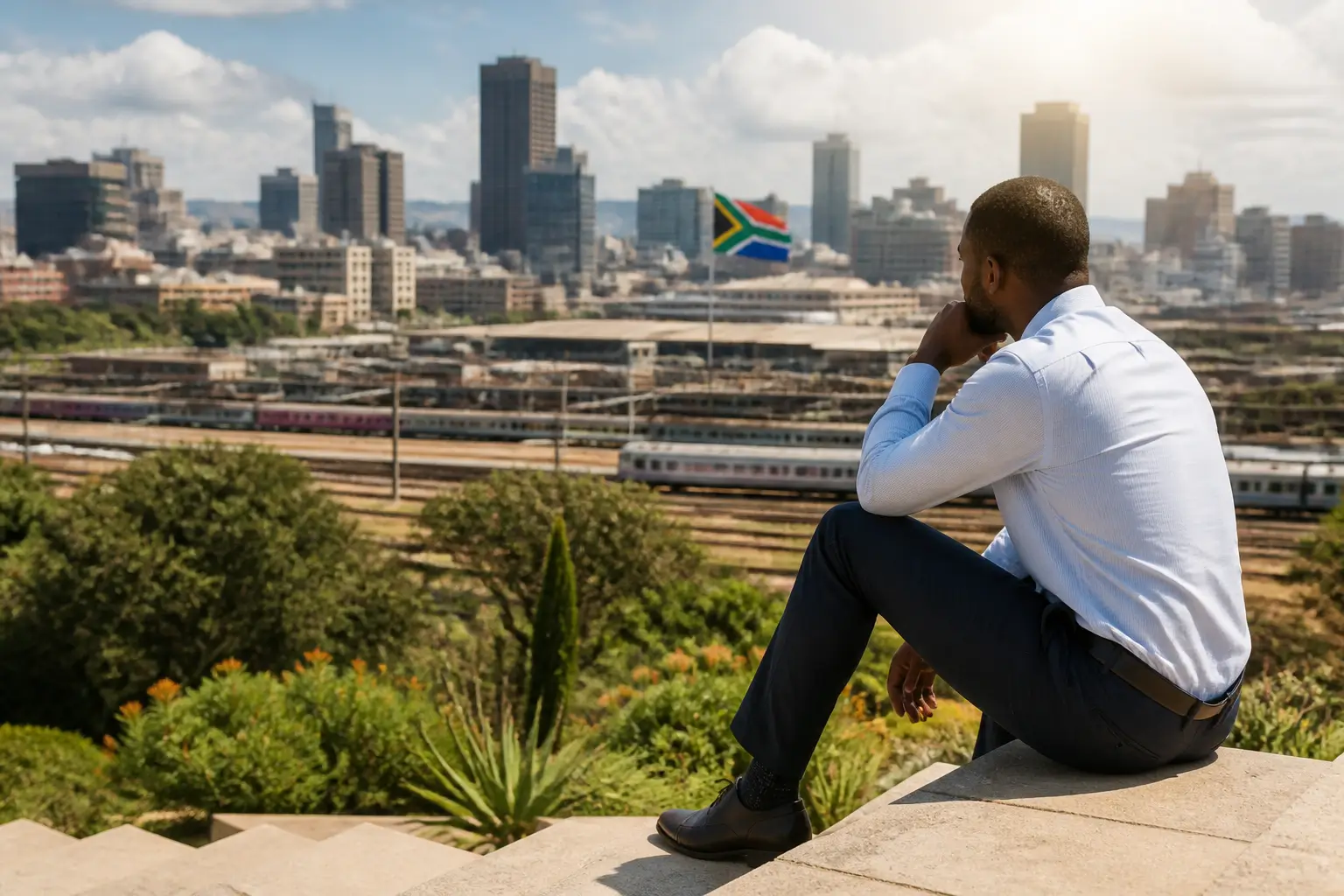


Wasteful spending Pretoria: the R6.8m police headquarters story
Wasteful spending Pretoria hit the headlines again in early 2025 when it emerged that the South African Police Service was paying approximately R6.8 million per month on a new headquarters building in the capital — a building that sits largely empty and unused. According to reports in the South African press, the facility has remained unoccupied for months while rental payments continue to drain the public purse.
The story has sparked familiar frustration: what else could that money have funded if it had been used properly? Better policing, community safety programmes, infrastructure maintenance — the list is long. But the R6.8 million wasteful spending in Pretoria is not just a government accountability problem. For ordinary South Africans trying to manage school fees, transport, groceries and personal loans with care, this kind of public-sector waste has real knock-on effects at household level.
When public money is spent on buildings that sit empty, taxpayers still carry the cost. And in a country where many households already watch every rand, wasteful spending can quietly increase the financial pressure families feel every month.
Our team often says this: when public spending is sloppy, ordinary households feel it in quieter ways — through pressure on taxes, weaker service delivery and less room left in the monthly budget.
What does wasteful spending do to household budgets in South Africa?
Most families do not see the waste directly. They see the knock-on effects.
According to data from Statistics South Africa, household debt-to-income ratios have remained stubbornly high in recent years, with many families struggling to save or build emergency funds. When public spending is inefficient, the pressure mounts in subtle ways: less investment in services people rely on, more strain on the tax base, and a growing sense that the system does not work for ordinary people.
That last point matters a lot. When money feels tighter — whether because of fuel hikes, food inflation or simply a lack of reliable public services — people sometimes rely more heavily on credit to cover emergencies or month-end gaps. Credit can be useful, but only if the repayment fits the budget comfortably.
Say a family in Pretoria is already juggling fuel, food and school costs. If their monthly spending is under pressure, even a small extra bill can push them towards borrowing. That is why public waste is not just a government problem. It shapes how households borrow, spend and save.
So how does wasteful spending Pretoria connect to credit behaviour?
In South Africa, many people use credit to deal with short-term pressure. That includes instalments, store accounts, vehicle finance and personal loans. The key issue is not borrowing itself. The issue is whether the repayments are realistic and whether the borrowing is driven by genuine need or by a wider sense of financial strain.
When households are already stretched — partly because the value they receive from public spending feels poor — waste at a public level can add to a wider feeling of financial insecurity. That can make people less comfortable saving and more likely to lean on debt for everyday needs. Once that happens, repayment discipline becomes even more important.
Financial commentators have noted that South African consumers often turn to credit not for luxury purchases but to smooth income shocks and cover basic expenses. The National Credit Regulator's data shows millions of South Africans have impaired credit records, many due to missed repayments on otherwise sensible loans. The link is clear: when the financial environment feels uncertain, households need stronger discipline, not weaker.
- Money decision: Borrowing for an emergency — What to ask yourself: Can I repay it without missing other bills? — Why it matters: Protects your budget from falling behind
- Money decision: Using credit for daily expenses — What to ask yourself: Is this a once-off gap or a repeating problem? — Why it matters: Shows whether the issue is short-term or structural
- Money decision: Taking on new instalments — What to ask yourself: Will I still cope if another cost appears? — Why it matters: Builds a safer buffer for monthly pressure
Could public waste affect your repayment habits?
Yes, indirectly. When people feel like the system is wasting money — R6.8 million a month on an empty building, for example — they often become more cautious and more frustrated. That can change how they manage their own finances.
Some households respond by tightening spending. Others feel forced to use credit to bridge the gap between income and expenses. Both reactions are understandable. But neither should lead to rushed borrowing.
We often remind readers to slow down before signing anything. Ask a few simple questions:
- Do I really need this now?
- Can I afford the repayments every month?
- What happens if my income is delayed or reduced?
- Have I checked whether I can cut another expense first?
Those questions are basic, but they are powerful. They help protect your finances when the wider environment feels uncertain.
What lesson should Pretoria families — and all South Africans — take from this story?
The main lesson is not only about government accountability. It is also about personal discipline. If a public institution can lose sight of value for money, households must be even more careful with their own rand.
That means treating every debit order, every instalment and every card payment as part of one plan. It also means building a little breathing room where possible. Even a small emergency buffer can reduce the need to borrow under pressure.
In our experience, the families who cope best are not the ones with the highest income. They are the ones who watch their spending closely and borrow only when the repayment is realistic.
Practical habits that help
- Review your monthly spending before applying for new credit.
- Separate needs from wants.
- Keep track of all fixed repayments.
- Use credit for planned expenses, not panic spending.
- Check that the monthly instalment still fits if another bill arrives.
If you are thinking about applying for a personal loan and want to understand how to budget for repayments responsibly, our team can help you explore your options. Visit Spring Loans for straightforward guidance.
Why wasteful spending Pretoria should matter to every taxpayer
Wasteful spending Pretoria — whether it is the R6.8 million police headquarters case or any other example of poor public-sector financial discipline — is a reminder that public money does not belong to a faceless system. It comes from taxpayers, including families who are trying to stay ahead of debt and keep up with rising costs in South Africa.
That is why debates about empty buildings and unused offices should matter to ordinary people. They are really debates about value, discipline and accountability. Those same ideas apply to household money too.
If you are considering credit to cover a shortfall or to finance a purchase, take your time and compare your options carefully. A good decision is one that fits your budget today and still feels manageable next month. Our article on understanding credit in South Africa may also help you make more informed choices.
Where public waste meets personal responsibility
The R6.8 million a month spent on an empty police building in Pretoria is a stark example of how not to manage money. But it is also a useful mirror. When we criticise wasteful spending by government, we should also ask ourselves: are we managing our own finances with the same discipline we expect from public institutions?
Building good repayment habits, avoiding unnecessary debt and planning for the unexpected are not just sensible personal finance practices. They are acts of financial citizenship. In a country where public money is often poorly spent, households that manage their own budgets well are quietly building resilience from the ground up.
Frequently asked questions
Does wasteful spending by government affect my personal budget?
Indirectly, yes. It can add pressure to taxpayers, weaken public services and contribute to a general sense of financial insecurity that makes households more reliant on credit.
Should I borrow more when money feels tight?
Only if the repayments are affordable and you have checked that the credit will not make your situation worse. Borrowing should solve a problem, not create a new one.
What is the safest way to use personal loans?
Use them for a clear purpose, keep the amount sensible and make sure the monthly repayment fits your income. Always consider whether you can afford the loan before you sign.
Why is repayment discipline so important in South Africa?
Because missed payments can quickly turn a short-term problem into a longer one. Good repayment habits protect your credit record, reduce stress and keep your financial options open.
Where can I read more about the R6.8m police headquarters story?
The story was widely reported in South African media in early 2025. You can find detailed coverage on most major South African news outlets.
This article is for general informational purposes only and is not financial advice. Spring Loans is a registered South African credit provider — please speak to a qualified financial adviser or registered credit provider before making borrowing decisions.
Ready to apply?
Spring Loans is a registered South African credit provider. Visit www.springloans.co.za to check your eligibility and apply online.

.svg)